Posts
Here, in the comments to one of my posts, I promised to look at the career map in IT. The…
January 30, 2025 at 2:01 PM•Max Knyazev is typing…Telegram mirror
I'm here in the comments to one of mypostspromised to sort out the career map in IT. The time has come🗓
What is a career map?
You can find dozens of definitions, but I like this one because it is simple and understandable🧐
How to understand that IT is yours?
First answer three questions:
1️⃣ Wondering how a computer works?
2️⃣ Do you want to understand how applications/games work?
3️⃣ Do you like smart devices and robots?
If at least one answer is “yes,” then welcome to engineering. If not, perhaps you'd rather just use devices and apps than create them yourself (and that's okay too)
Here I want to give one small piece of advice to parents - do not force your child to go into IT if he is not passionate about it. Just like in music or sports, you can’t build happiness by force. But if your child is enthusiastically disassembling the TV remote control or his toy robot, and in between this he bombards you with questions like “How does the TV screen show the picture?” - this is a signal, don’t blink🧠
Where to go?
In IT, all professions can be divided into two large camps:
📺 Engineering (hardware)
🧑💻 Software (software)
Yes, they can object to me and name a dozen more different tracks, ranging from data analysis to interface design. So, the base for all of them will be the same. It is the hardware and software approaches that are radically different. Believe me, if you have received a foundation in the software track, it will not be difficult for you to transition into either a developer or a data analyst. Let's get a little more detailed🤔
Engineering track⚙️
First of all, it's about hardware. Robots, sensors, microcircuits, smart devices. The basis here is not even mathematics (although you can't go anywhere without her), and physics. You will have to understand electronics and circuitry
Examples of professions include IoT engineer, embedded developer, electronics engineer, circuit designer and other more “hardware” areas. It is important to understand that in this track you may not know development patterns, but you must understand microcontrollers, chips and other issues at one level or another
Program track👨💻
This is about code - applications, websites, games, algorithms, operating systems, automation tools, etc. Here the basis will be mathematics, logic, knowledge of programming languages
Within professions, this could be a web developer, data scientist, game dev, DevOps, AppSec, software architect. The programmer may not understand circuit design, but will write code that will make the hardware work as it should
How to develop?
Don't jump into complex things right away. Start with the basics: algorithms, basic mathematics or physics - depending on the chosen direction
🧮
Do projects. Theory is dead without practice. Build smart devices, write simple games, analyze data and automate this process
👨💻
Look for a mentor. This could be a teacher, a colleague, or even a YouTube channel. The main thing is that someone guides and corrects. Just learn to learn from everyone and everything you interact with.
👨🏫
Be wrong. Failure is part of the journey. Solving errors ( there will always be a lot of them, regardless of your experience ), you become more expert and experienced
🌡
Where to grow?
IT - infinite field ( or, in any case, an immensely large ). It's important to just not stop. Even if you choose one direction, after a couple of years you can quite easily change it to a related one
💯
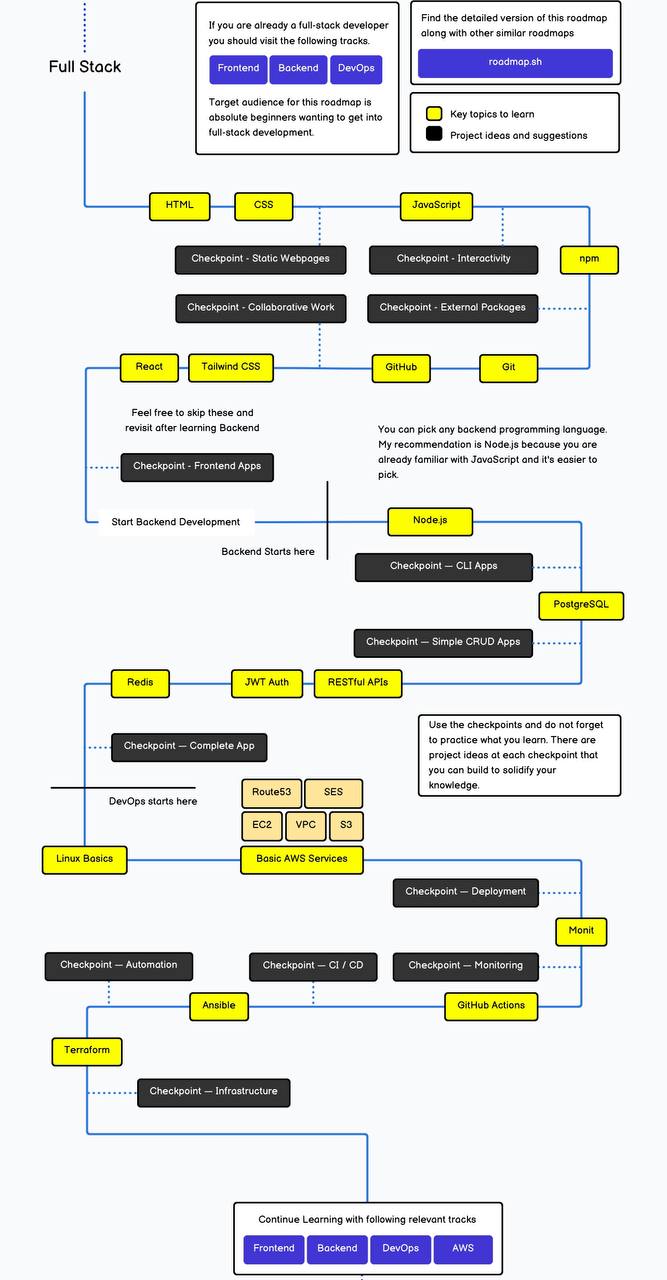
Well, to make it more convenient and comfortable for you to navigate exactly the positions, I decided to leave you a couple ( literally two ) useful links:
1. roadmap.sh — here there are detailed roadmaps for various IT areas. It is clear what to study and in what order
2. My post about career tracks in information security — if you are interested in cybersecurity, here I discuss how to enter and develop it
Something like that. Share your opinion in the comments. If you want me to consider something in more detail, write too
👨🎓
#career
Open original post on TelegramWhat is a career map?
A career map is a professional development plan
You can find dozens of definitions, but I like this one because it is simple and understandable
How to understand that IT is yours?
First answer three questions:
If at least one answer is “yes,” then welcome to engineering. If not, perhaps you'd rather just use devices and apps than create them yourself (and that's okay too)
Here I want to give one small piece of advice to parents - do not force your child to go into IT if he is not passionate about it. Just like in music or sports, you can’t build happiness by force. But if your child is enthusiastically disassembling the TV remote control or his toy robot, and in between this he bombards you with questions like “How does the TV screen show the picture?” - this is a signal, don’t blink
Where to go?
In IT, all professions can be divided into two large camps:
Yes, they can object to me and name a dozen more different tracks, ranging from data analysis to interface design. So, the base for all of them will be the same. It is the hardware and software approaches that are radically different. Believe me, if you have received a foundation in the software track, it will not be difficult for you to transition into either a developer or a data analyst. Let's get a little more detailed
Engineering track
First of all, it's about hardware. Robots, sensors, microcircuits, smart devices. The basis here is not even mathematics (although you can't go anywhere without her), and physics. You will have to understand electronics and circuitry
Examples of professions include IoT engineer, embedded developer, electronics engineer, circuit designer and other more “hardware” areas. It is important to understand that in this track you may not know development patterns, but you must understand microcontrollers, chips and other issues at one level or another
Program track
This is about code - applications, websites, games, algorithms, operating systems, automation tools, etc. Here the basis will be mathematics, logic, knowledge of programming languages
Within professions, this could be a web developer, data scientist, game dev, DevOps, AppSec, software architect. The programmer may not understand circuit design, but will write code that will make the hardware work as it should
How to develop?
Don't jump into complex things right away. Start with the basics: algorithms, basic mathematics or physics - depending on the chosen direction
Do projects. Theory is dead without practice. Build smart devices, write simple games, analyze data and automate this process
Look for a mentor. This could be a teacher, a colleague, or even a YouTube channel. The main thing is that someone guides and corrects. Just learn to learn from everyone and everything you interact with.
Be wrong. Failure is part of the journey. Solving errors ( there will always be a lot of them, regardless of your experience ), you become more expert and experienced
Where to grow?
IT - infinite field ( or, in any case, an immensely large ). It's important to just not stop. Even if you choose one direction, after a couple of years you can quite easily change it to a related one
Well, to make it more convenient and comfortable for you to navigate exactly the positions, I decided to leave you a couple ( literally two ) useful links:
1. roadmap.sh — here there are detailed roadmaps for various IT areas. It is clear what to study and in what order
2. My post about career tracks in information security — if you are interested in cybersecurity, here I discuss how to enter and develop it
Something like that. Share your opinion in the comments. If you want me to consider something in more detail, write too
#career
Discussion
Comments
Comments are available only to confirmed email subscribers. No separate registration or password is required: a magic link opens a comment session
Join the discussion
Enter the same email that you already used for your site subscription. We will send you a magic link to open comments on this device
There are no approved comments here yet